
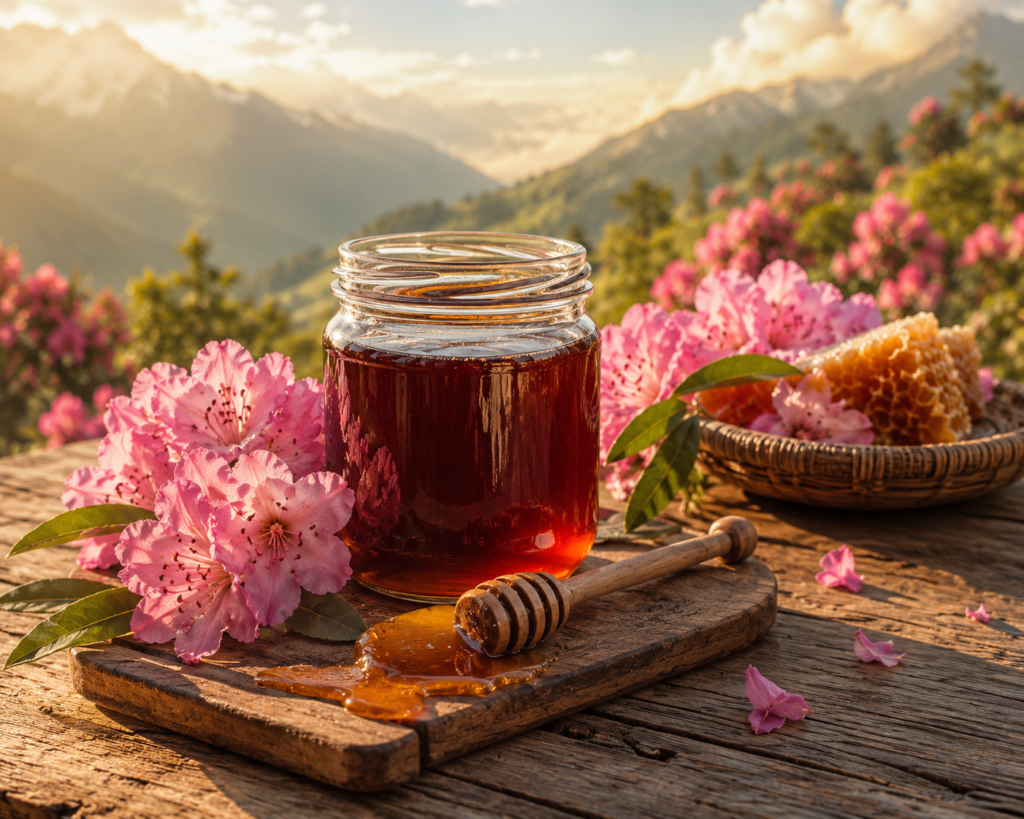
Mad honey has been used across Himalayan communities for generations, long before “wellness” became a marketing category. But separating genuine traditional use from exaggerated online claims matters especially with a product whose active compound, grayanotoxin, is genuinely potent. This guide covers what mad honey benefits are actually documented through tradition and early research, where the evidence is anecdotal rather than clinical, and how to think about it honestly before trying it.
We’ll say this upfront, and mean it: Everest Mad Honey does not market this product as a cure or treatment for any medical condition. What follows is a transparent look at traditional use, reported effects, and current research not medical advice.
Mad Honey for Energy
One of the more commonly reported traditional uses is mad honey for energy though not in the caffeine-like sense most people expect. Users describe a different kind of energy: a grounded, alert calm rather than a stimulant rush. In Himalayan tradition, small amounts were taken before physical exertion, such as long treks or cold-weather labor, believed to support stamina and warmth. This isn’t a documented clinical effect, but it’s a consistent thread across generations of anecdotal use in the region.
Mad Honey for Sleep
Mad honey for sleep is perhaps the most frequently cited modern use. The same grayanotoxin activity that produces relaxation at a small dose also tends to bring on drowsiness, which is why many users take it in the evening rather than during the day. Reported effects include an easier time falling asleep and a deeper sense of physical relaxation beforehand. As with every effect discussed here, this depends entirely on a small, correctly measured dose — larger amounts move from “relaxing” toward the territory covered in our guide on Mad Honey side effects.
Mad Honey for Relaxation
Mad honey for relaxation is the effect most closely tied to why the honey became culturally significant in the first place. Users consistently describe a warm, calming sensation, sometimes with mild euphoria, that begins within 45 minutes to two hours of a small dose. This is the traditional core of mad honey’s reputation — not a stimulant, not a sedative in the pharmaceutical sense, but a distinct, mellow physical calm rooted in how grayanotoxin interacts with the nervous system.
Mad Honey and Blood Pressure
This is one of the most important sections in this entire guide, because it cuts both ways. Traditionally, small amounts of mad honey have been associated with a mild, temporary drop in blood pressure part of what produces the relaxed sensation. But this same mechanism is exactly why mad honey and blood pressure medication, or mad honey and existing hypotension, is a genuine safety concern rather than a benefit. For a healthy adult without blood pressure issues, a small dose’s effect on blood pressure is generally mild and short-lived. For anyone with a cardiovascular condition, it is a risk factor, not a benefit covered in detail in our guide on Mad Honey and heart patients.
Mad Honey for Men
Traditional use in Himalayan and Turkish folk medicine has long included mad honey for men, often associated with stamina, vitality, and general wellness — themes common across many traditional tonics worldwide. It’s worth being direct: these are cultural and anecdotal associations passed down through generations, not clinically validated outcomes, and no reputable seller should present them as guaranteed effects.
Mad Honey for Women
Similarly, mad honey for women appears in traditional use for general wellness and relaxation, without gender-specific clinical research to support distinct effects. The traditional framing across both mad honey for men and mad honey for women is broadly the same — a calming, warming tonic used occasionally rather than daily, tied more to ritual and moderation than to any targeted physiological claim.
Mad Honey for Libido
Mad honey for libido is one of the more persistent traditional claims, often mentioned alongside its broader reputation as a vitality tonic in Nepali and Turkish folk use. As with every claim in this article, this sits in the category of traditional belief rather than demonstrated clinical effect, and should be understood that way rather than as a guaranteed outcome.
Mad Honey Antioxidants
Beyond grayanotoxin, mad honey — like most raw, unprocessed honey — naturally contains flavonoids and phenolic compounds, the same general category of antioxidants found in raw honey more broadly. Mad honey antioxidants haven’t been specifically isolated and studied as extensively as grayanotoxin itself, but the raw, minimally processed nature of authentic mad honey means it retains more of these naturally occurring compounds than heavily processed, pasteurized honey typically found on supermarket shelves.
Traditional Use of Mad Honey
The traditional use of mad honey spans over two thousand years, from ancient Greek historical accounts to its ongoing role in Nepali Gurung honey-hunting communities today. Traditionally, it was used sparingly — a small spoonful taken occasionally, often tied to specific seasons, physical demands, or communal rituals, rather than a daily wellness supplement in the modern sense. This distinction matters: the tradition itself has always emphasized restraint and small amounts, which lines up closely with modern safety guidance rather than contradicting it.
Scientific Research on Mad Honey
Scientific research on mad honey exists, though it’s more limited and more focused on toxicology than on wellness benefits specifically. Most published research comes from medical case studies — particularly from Turkey, where grayanotoxin poisoning cases are more commonly documented and studied by physicians treating them. This research has been valuable for understanding dosage thresholds, symptom patterns, and treatment approaches, and it indirectly supports why small, controlled doses are associated with mild effects while larger doses carry real risk. What’s genuinely missing from the scientific literature is large-scale clinical research specifically validating wellness benefits — which is why this guide consistently distinguishes between tradition and clinical proof rather than blending the two.
Grayanotoxin: Understanding the Compound Behind the Effects
Any honest discussion of grayanotoxin benefits has to start by being clear about what grayanotoxin actually is: a naturally occurring toxin found in rhododendron nectar, not a nutrient or vitamin. At small, carefully controlled doses, its interaction with sodium channels in nerve and muscle tissue is what produces the relaxing, warming sensation associated with mad honey. At larger doses, the same mechanism is what causes poisoning. This dual nature — a compound that’s simultaneously the source of the desired effect and the source of the risk — is the single most important thing to understand about mad honey, and it’s why dosage, sourcing, and personal health history matter so much more here than with ordinary honey. For a full breakdown of the risk side of this equation, see our complete guide to Mad Honey side effects.
Honey vs Mad Honey: What’s Actually Different
When people compare honey vs mad honey, the difference isn’t a matter of degree — it’s a difference in what’s actually in the jar. Regular honey comes from bees foraging across many flower types, contains no grayanotoxin, and has no measurable physiological effect beyond its sugar content. Mad honey comes from bees foraging almost exclusively on wild rhododendron blooms during a specific season, which concentrates grayanotoxin into the honey in a way ordinary multi-floral honey never develops. This is also why mad honey has a noticeably different color, taste, and texture from regular honey — a direct, physical consequence of its single-source origin, not a marketing distinction.
The Honest Takeaway
Mad honey’s traditional reputation for energy, sleep support, relaxation, and vitality is real in the sense that it reflects genuine, generations-old cultural use — but it isn’t the same thing as a clinically proven health benefit. The most responsible way to think about mad honey benefits is as a traditional, culturally significant product with reported effects that most people find pleasant in small, correctly measured doses, alongside a genuine, well-documented risk profile at higher doses. Anyone considering trying it should read both sides — this guide on benefits, and our companion guide on side effects — before their first jar.
Frequently Asked Questions
Are mad honey benefits scientifically proven?
No, not in the clinical sense. Most of what’s described as benefits comes from centuries of traditional use and anecdotal reports. Scientific research on mad honey has focused primarily on toxicology and poisoning thresholds rather than validating specific wellness claims.
Is mad honey good for blood pressure?
Mad honey can temporarily lower blood pressure at a small dose, which contributes to its relaxing effect in healthy adults. For anyone with existing low blood pressure or a cardiovascular condition, this same effect is a risk, not a benefit — medical guidance should be sought first.
What’s the real difference between honey vs mad honey?
Regular honey comes from mixed floral sources and has no grayanotoxin or notable physiological effect. Mad honey comes almost exclusively from rhododendron nectar, giving it a distinct color, taste, and mild bioactive effect that ordinary honey doesn’t have.