
Knowing what a bad reaction to Mad Honey actually looks like is one of the most practical things you can learn before your first jar. Most users never experience anything beyond mild, comfortable effects — but understanding the full range of symptoms, from the completely normal to the genuinely concerning, lets you recognize the difference quickly and respond appropriately if something feels wrong.
This article walks through the full symptom picture: what to expect at a normal dose, what mild overconsumption looks like, and which specific warning signs mean it’s time to stop and seek medical attention.
When Symptoms Typically Appear
Grayanotoxin’s effects generally begin within twenty minutes to two hours of consumption, though the exact timing varies from person to person based on metabolism, body weight, and how much was eaten alongside the honey. This delayed and somewhat variable onset is important to understand, because it’s the root cause of one of the most common mistakes people make: taking an initial dose, feeling nothing after the first twenty or thirty minutes, and deciding to take more — only to have the effects of both doses arrive at roughly the same time.
Understanding this timing is arguably as important as understanding the symptoms themselves, because patience in the first two hours prevents a large share of unwanted reactions before they ever start.
Mild to Moderate Symptoms — What Most People Experience
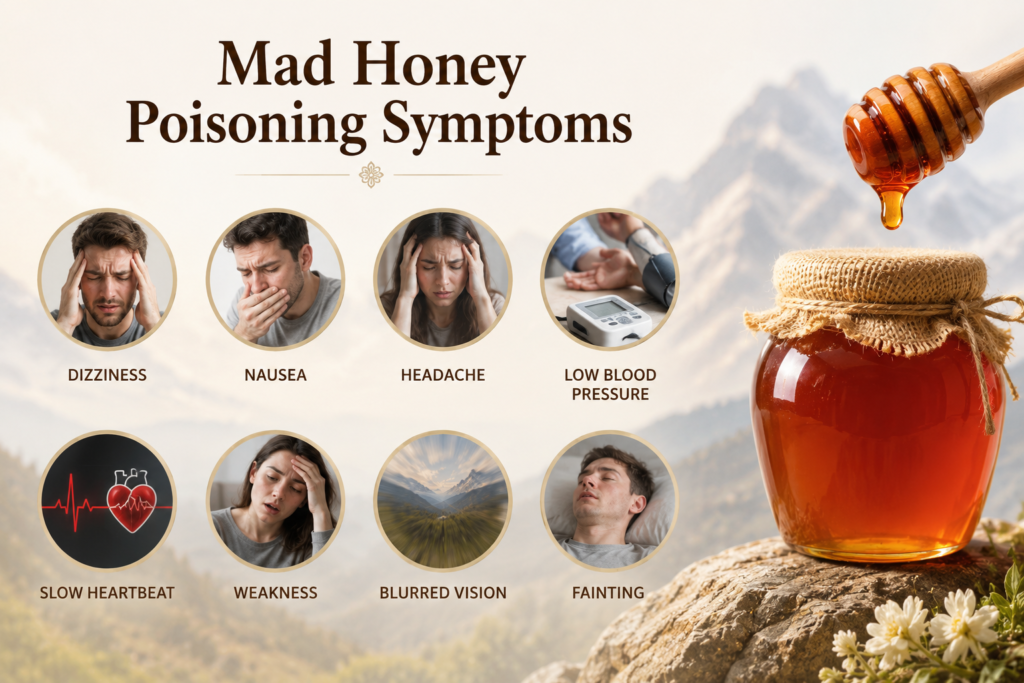
At a correctly measured dose, most users experience symptoms that are mild, generally comfortable, and short-lived. These commonly include a sense of dizziness or lightheadedness, particularly noticeable when standing up quickly. Mild nausea is also common, and in some cases progresses to actual vomiting, especially at slightly higher doses. Excessive sweating is another frequently reported effect, often appearing somewhat suddenly. Many users also report numbness or a tingling sensation, most commonly around the lips, mouth, or fingertips — this is actually one of the more distinctive and recognizable signs of grayanotoxin’s effect on the nervous system. Mild, temporary blurred vision is reported by some users as well. And drowsiness — a heavy, deeply relaxed feeling — is one of the more sought-after effects, though it can become more pronounced than intended at a slightly higher dose.
These symptoms, taken together, represent the range that most people should expect and are generally not cause for concern on their own. They typically fade within a few hours without intervention.
Serious Symptoms — When to Seek Medical Attention
There is a distinct second tier of symptoms that indicates the body has been affected more significantly than the mild category above, and these should never be waited out at home. A genuinely slowed heart rate, known medically as bradycardia, is one of the clearest signs of a more serious reaction. A noticeably low blood pressure, severe enough to cause significant lightheadedness or difficulty staying upright, is another. Chest discomfort or any sense of an irregular heartbeat should always be taken seriously. Fainting, or even a close call with fainting, is a clear signal that the reaction has moved beyond mild territory. Difficulty breathing is a symptom that warrants an immediate emergency response rather than a wait-and-see approach. And confusion, or genuine trouble staying alert and oriented, rounds out this list of symptoms that indicate the situation has become a medical one rather than a manageable discomfort.
If any of these symptoms appear, the right response is to treat it as a medical situation immediately rather than continuing to monitor at home. Our companion emergency guide walks through the exact steps to take, including when to call for help and what to do while you wait.
How to Tell the Difference in Practice
In the first fifteen or twenty minutes, the line between a mild, expected reaction and something more serious isn’t always perfectly obvious, which is exactly why it helps to have this list in mind ahead of time rather than trying to assess it in the moment. A useful practical distinction is severity and function: mild symptoms are uncomfortable but don’t meaningfully interfere with your ability to function, think clearly, or maintain your balance while seated or lying down. Serious symptoms do — an inability to stay upright, real difficulty staying alert, chest symptoms, or breathing difficulty all cross that threshold clearly.
If you’re ever unsure which category a symptom falls into, the safest approach is to treat it as the more serious possibility rather than assuming the best. Waiting to see if a concerning symptom resolves on its own is one of the more common and avoidable mistakes people make, and it’s exactly the situation where erring toward caution costs little and protects a great deal.
How Symptoms Tend to Progress
In most documented cases, mild symptoms appear first, and from there one of two things happens. In the large majority of cases at a correct dose, they simply plateau and then gradually fade over the following few hours as the body processes the compound. In cases involving overconsumption, however, symptoms can progress from the mild category toward the more serious one, sometimes over the course of an hour or two rather than appearing all at once. This progression pattern is part of why the two-hour waiting period between doses matters so much — symptoms from an initial dose may still be building even when the first thirty minutes felt uneventful, and adding a second dose during that window can push a reaction from the mild category into the serious one.
Who Is More Likely to Experience the Serious Symptoms
Severity isn’t randomly distributed — it correlates closely with the same factors that determine overall risk. Dose is the most direct factor: a larger amount of honey, or honey with unusually high grayanotoxin concentration from an untested source, is more likely to produce serious symptoms even in an otherwise healthy person. Personal health history matters just as much. People with existing heart conditions, naturally low blood pressure, or who are taking medication that affects heart rate or blood pressure are considerably more likely to progress toward serious symptoms even at a dose that would be mild for someone without those factors. Combining honey with alcohol or sedating medication also meaningfully raises the likelihood of a more serious reaction, since both interact with the same cardiovascular and nervous system pathways that grayanotoxin affects.
Our companion article on who should avoid Mad Honey goes through each of these risk groups in detail, and it’s worth reading in full if any of these factors apply to you or someone you’re considering sharing honey with.
What This Means in Practice
The practical takeaway from this symptom list isn’t meant to be alarming — it’s meant to be useful. The overwhelming majority of Mad Honey users, using a correctly measured dose of lab-tested honey, will never experience anything beyond the mild, comfortable end of this spectrum. But knowing the full range in advance means that if something does feel different or more intense than expected, you’re equipped to recognize it quickly rather than trying to figure out in the moment whether a given symptom is normal.
This is also exactly why source matters as much as dose. Lab-tested, batch-verified honey means the dosage guidance you’re following actually corresponds to the potency in your specific jar, which removes one of the biggest sources of unpredictability in how symptoms present.
When in Doubt
If you’re ever genuinely unsure whether what you’re experiencing is a normal reaction or something more serious, the safest default is to treat it as serious. Stop consuming, sit or lie down, and if symptoms don’t clearly improve within a short period — or if any of the serious symptoms listed above appear at any point — seek medical attention rather than continuing to wait and monitor. This guide is designed to help you recognize the signs quickly; it isn’t designed to replace medical judgment once those signs appear.