Honey is honey, right? Not quite. Mad honey stands apart from every other variety on the market in ways that go far beyond marketing — real botanical, chemical, and cultural differences that explain both its reputation and its price. Here’s what actually sets it apart.
1. A Single, Wild Floral Source
Nearly all commercial honey comes from bees foraging across dozens of flower types, blending into a broadly consistent flavor and composition. Mad honey is different because the bees that produce it forage almost exclusively on wild rhododendron flowers during a short seasonal window. This single-source foraging is the root cause of nearly every other difference on this list — flavor, effect, rarity, and price all trace back to it.
2. A Genuine Bioactive Compound
This is the difference that matters most. Mad honey contains grayanotoxin, a naturally occurring compound from rhododendron nectar that produces a real, measurable physiological effect — something ordinary honey simply doesn’t have. This is what separates mad honey from every other “exotic” or premium honey variety on the market, including well-known types like Manuka, which are prized for other properties (like antibacterial activity) without any nervous-system or cardiovascular effect.
3. It Can’t Be Farmed or Scaled
Because it depends entirely on wild rhododendron blooms at specific altitudes and a very particular bee species, mad honey can’t be produced through conventional beekeeping the way most commercial honey can. There’s no farming shortcut, no way to plant rhododendron fields and scale production — it depends on wild ecosystems and a harvesting tradition that’s inherently limited by nature itself.
4. The Bees Themselves Are Different
Giant Himalayan bees (Apis laboriosa) are the largest honey bee species in the world, distinct from the common Apis mellifera used in most global honey production. They build massive combs on exposed cliff faces rather than enclosed hives, a behavior that shapes the entire harvesting process and is part of why mad honey production looks nothing like typical beekeeping.
5. How It’s Harvested
Ordinary commercial honey is generally extracted from managed hives using modern beekeeping equipment. Mad honey is harvested by hand, using techniques passed down through generations of honey-hunting communities, climbing sheer cliff faces on handmade rope ladders. This isn’t a stylistic choice — it’s the only way to access these specific hives at all.
6. Distinct Color, Taste, and Texture
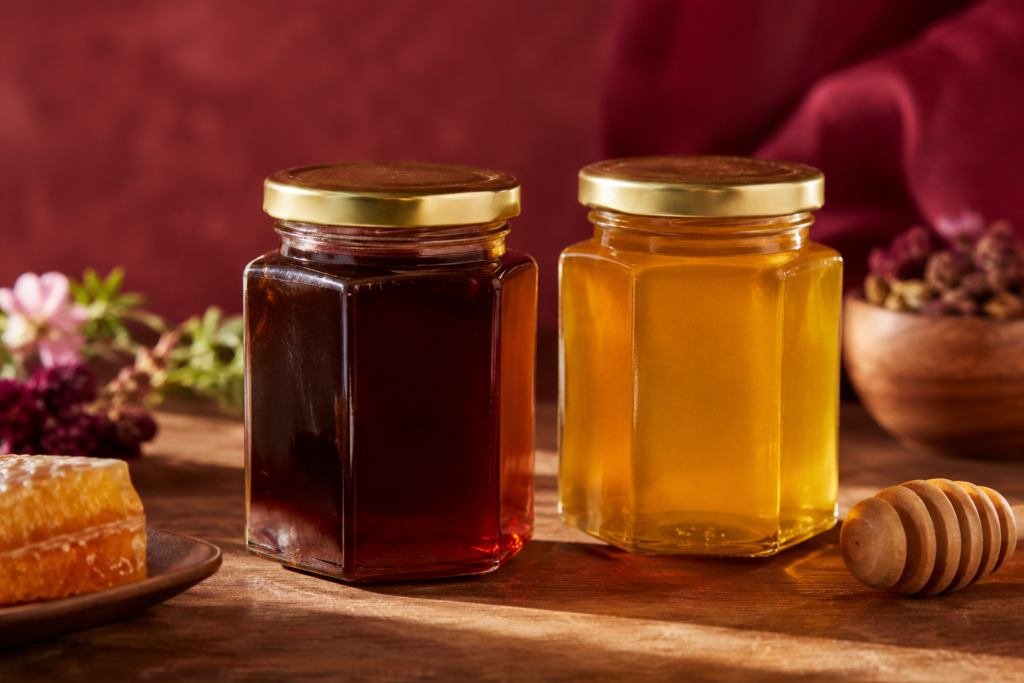
Mad honey is visibly and sensorially different from regular honey — a deep reddish-brown or mahogany color rather than golden amber, a more bitter and complex flavor rather than straightforward sweetness, and a thicker, more resinous texture. These aren’t cosmetic differences; they’re direct physical consequences of its single-source rhododendron origin.
7. Real Rarity and Price
Because of everything above — limited seasonal windows, a specific ecological niche, dangerous manual harvesting, and no ability to scale production — genuine mad honey is meaningfully rarer and more expensive than ordinary honey, even premium varieties. This scarcity is structural, not manufactured for marketing purposes.
What This Means for Buyers
Understanding these differences matters practically, not just academically. Because mad honey has a real physiological effect, it needs to be treated with the same care you’d give any bioactive substance — measured dosing, awareness of who should avoid it, and buying only from a source with lab-verified potency. None of this applies to ordinary honey, which is exactly why mad honey occupies such a different category despite sharing a name.
Final Thoughts
What makes mad honey different isn’t a single feature — it’s a chain of connected facts starting with its wild rhododendron source, running through its unique bee species and harvesting method, and ending in its distinctive sensory profile, genuine effects, and real scarcity. Understanding this chain is the best way to approach mad honey with realistic expectations, rather than treating it as simply a more expensive version of the honey already in your kitchen.
Frequently Asked Questions
Is mad honey just a marketing term for premium honey?
No. Mad honey is chemically and botanically distinct due to its grayanotoxin content from rhododendron nectar — a real difference, not a branding exercise.
Why can’t mad honey be mass-produced like regular honey?
It depends on wild rhododendron blooms at specific altitudes and a bee species that builds exposed cliff-face hives, neither of which can be replicated through conventional farming or beekeeping.
Is all rare or expensive honey the same as mad honey?
No. Other premium honeys, like Manuka, are valued for different properties (such as antibacterial activity) and don’t contain grayanotoxin or produce any physiological effect.