
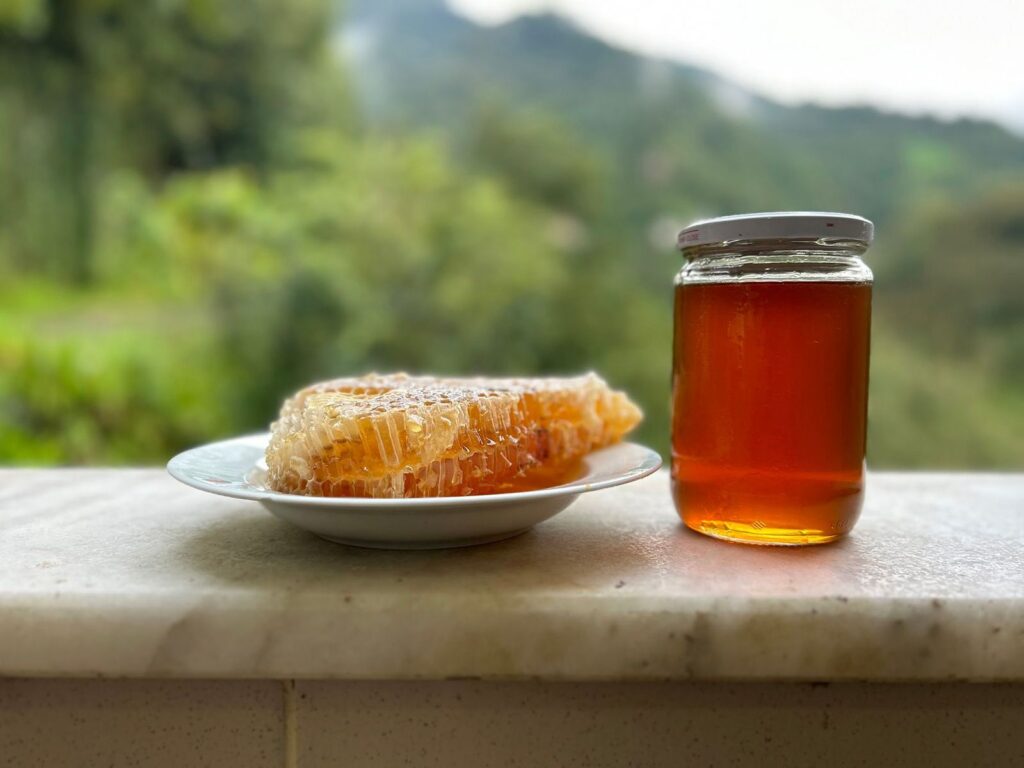
Anyone researching this rare Himalayan honey eventually lands on the same question: what are the actual mad honey effects, and are they safe? It’s a fair question, and an important one because unlike ordinary honey, mad honey contains naturally occurring compounds that genuinely affect the body, for better or worse depending on how much is consumed.
This guide covers what causes mad honey’s effects, what people commonly report, the warning signs of taking too much, and how to approach it responsibly if you decide to try it.
What Causes Mad Honey’s Effects?
Mad honey gets its distinct effects from grayanotoxins, natural compounds found in the nectar and pollen of rhododendron flowers. Bees that forage on these blooms primarily in the high-altitude regions of Nepal and parts of Turkey produce honey that carries these compounds through to the final product.
Grayanotoxins work by affecting sodium channels in the body’s cells, which is why they can influence heart rate, blood pressure, and general nervous system activity. In small amounts, this produces the mild effects associated with traditional mad honey use. In larger amounts, the same mechanism is responsible for the toxicity that makes mad honey a substance to treat with real caution. If you want the fuller background on the honey itself, our guide on what mad honey is covers where it comes from and how it’s harvested.
Commonly Reported Mad Honey Effects
People who use mad honey in small, careful amounts often describe a combination of the following:
- A sense of warmth spreading through the body
- Mild relaxation or a calming sensation
- Lightheadedness, particularly if standing up quickly
- A tingling sensation, sometimes described around the mouth or extremities
These effects are typically reported to begin within 20 to 30 minutes of consumption and last a few hours. It’s worth being clear that individual experiences vary considerably body weight, personal sensitivity, and the potency of a given harvest batch all play a role, which is why there’s no single universal experience for everyone who tries it.
Why Mad Honey Effects Vary So Much
Not every jar of mad honey produces the same effects, and not every person responds the same way to the same jar. A few factors explain the variation:
Batch Potency Grayanotoxin concentration naturally varies between harvests depending on how exclusively the bees fed on rhododendron nectar during that season. A spring harvest might differ noticeably from an autumn one.
Body Weight and Metabolism Smaller individuals generally feel effects more strongly at the same serving size than larger individuals, simply due to how the compounds distribute through the body.
Individual Sensitivity Just as with caffeine or alcohol, some people are naturally more sensitive to grayanotoxins than others, independent of body size.
Serving Size This is the single biggest factor within your control. A very small amount tends to produce mild effects; larger amounts move quickly from “effect” into genuine toxicity.
When Mad Honey Effects Become Dangerous
This is the part of the conversation that matters most. In excessive amounts, grayanotoxin doesn’t just intensify the pleasant effects it causes a recognized medical condition sometimes called “mad honey disease” or grayanotoxin poisoning. Reported symptoms in these cases include:
- Significantly lowered blood pressure
- Slowed or irregular heart rate
- Nausea, vomiting, or excessive sweating
- Severe dizziness or fainting
- In rare, severe cases, loss of consciousness
These symptoms are the body’s response to overconsumption, not a “stronger version” of the pleasant effects people seek. Anyone with heart conditions, low blood pressure, or who is pregnant should avoid mad honey entirely, and even healthy individuals should treat serving size with real caution.
If you or someone else experiences symptoms like a very slow heart rate, fainting, or severe dizziness after consuming mad honey, this warrants prompt medical attention rather than waiting it out.
How to Approach Mad Honey Effects Responsibly
If you’re considering trying mad honey, a few principles matter more than any specific number:
- Start with the smallest possible amount far less than you might assume, and see how your body responds before considering more
- Never combine it with alcohol, blood pressure medication, or heart medication without first speaking to a doctor
- Choose lab-tested sources potency varies between sellers, and unverified products carry more risk because you can’t know the actual grayanotoxin concentration
- Avoid it entirely if you have any cardiovascular condition or are pregnant
We’ve put together a more detailed breakdown of serving considerations in our mad honey dosage guide, which covers the factors worth thinking through before your first try.
A Bit of History Behind Mad Honey’s Effects
Mad honey’s effects aren’t a modern discovery. One of the earliest documented accounts comes from the ancient Greek historian Xenophon, who described soldiers near the Black Sea region becoming disoriented after eating wild honey during a military campaign over two thousand years ago — later understood to be an early record of grayanotoxin poisoning. Centuries afterward, historical accounts describe mad honey being deliberately left behind for enemy armies to find, essentially using its effects as an early form of chemical deterrent.
In the Himalayan regions of Nepal, the relationship with mad honey took a very different path. Rather than being weaponized, it became part of traditional practice within honey-hunting communities, passed down across generations. Understanding this history helps explain why mad honey’s effects have always been treated with a mix of respect and caution by the very communities who harvest it this isn’t a novelty product, but something with a long, well-documented relationship between reward and risk.
First-Time Users vs. Experienced Users
There’s a noticeable pattern in how people describe mad honey effects based on experience level. First-time users are generally advised to expect very mild sensations at a cautious serving size, since they have no personal reference point for how their body responds. Experienced users, who have a better sense of their own sensitivity from prior careful use, sometimes report a more consistent, predictable experience at their established serving size.
This is exactly why every reputable source including this one emphasizes starting low regardless of what you may have read about anyone else’s experience. What feels mild to one person can be significant for another, and there is no way to know in advance which category you fall into.
Are Mad Honey Effects the Same as Regular Honey?
No this is one of the most important distinctions to understand. Ordinary Himalayan honey, made from mixed floral sources, doesn’t contain meaningful grayanotoxin levels and produces no notable physical effect beyond being honey. True mad honey’s effects come specifically from bees foraging almost exclusively on wild rhododendron blooms, which is precisely why sourcing and lab verification matter so much when buying it.
Frequently Asked Questions
How long do mad honey effects last?
Most reports describe effects beginning within 20-30 minutes and lasting a few hours, though this varies based on serving size, body weight, and individual sensitivity.
Are mad honey effects the same for everyone?
No. Body weight, personal sensitivity to grayanotoxins, and the potency of the specific batch all influence how strongly someone experiences mad honey’s effects.
Can mad honey effects be dangerous?
Yes, in excessive amounts. Overconsumption can cause grayanotoxin poisoning, with symptoms including low blood pressure, slowed heart rate, and severe dizziness. Always start with a very small serving and consult a doctor if you have any underlying health conditions.
Is it safe to try mad honey for the first time?
Many people do try it safely by starting with an extremely small amount and paying close attention to how their body responds. That said, anyone with heart conditions, low blood pressure, or who is pregnant should avoid it, and it’s worth discussing with a doctor beforehand if you have any health concerns.
If you’re ready to try authentic, lab-tested mad honey, browse our current harvest → — every batch is verified for potency and sourced directly from Nepal’s Solukhumbu region.
This article is for informational purposes only and is not medical advice. Please consult a healthcare professional before consuming mad honey, particularly if you have any underlying health conditions.